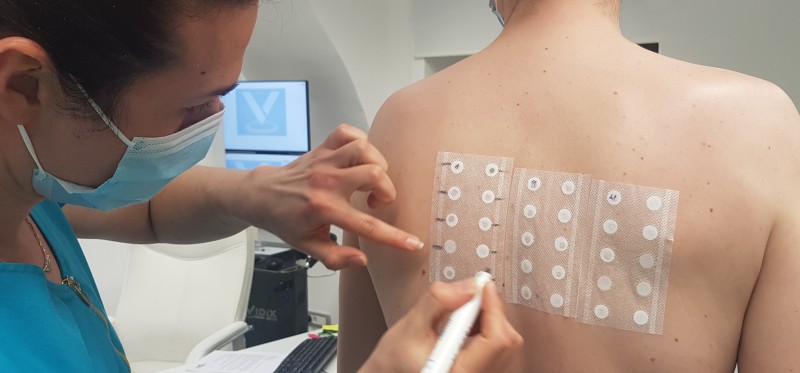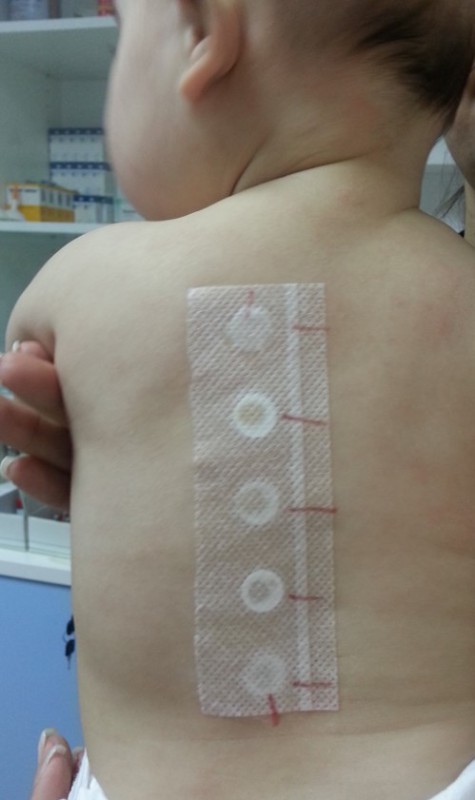
Skin allergy testing comprises a range of methods for medical diagnosis of allergies that attempts to provoke a small, controlled, allergic response.
Certain medications can affect the reactivity of the skin and should be stopped before skin testing: antihistamines at least 5 to 7 days earlier, systemic corticosteroids at least 3 weeks if given for a long time, or at least 3 days after a short course, or at least 2 weeks if applied locally to the test site.
PRICK test (skin prick test)
PRICK test or skin prick test is most often performed for nutritional (food) and inhalation (pollen) allergens. Additionally, the test can be performed for preservatives and additives.
Skin prick test is used to detect the presence of specific IgE antibodies in the skin of patients who are hypersensitive to a particular allergen. The skin prick test is a reliable test for detecting a type I / antibody-mediated allergic reaction.
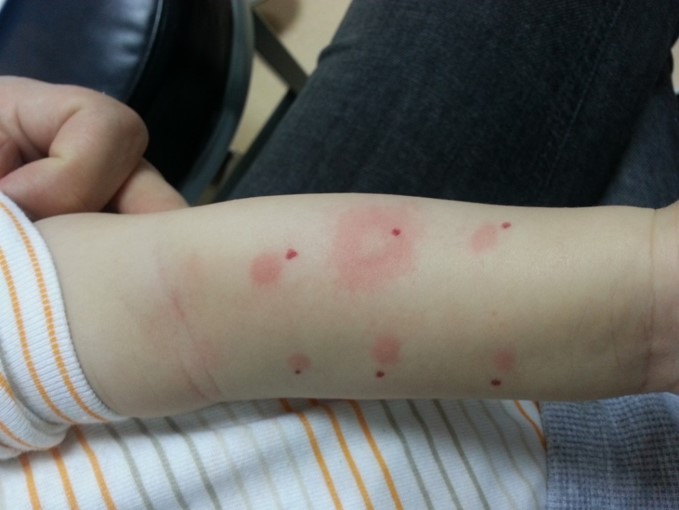
The test is performed in a sitting position. During testing, the allergen solution is applied in the form of drops on the skin (inner side of the forearm), and is inserted into the surface layer of the skin by pricking the lancet.
Both positive and negative controls need to be done for comparison. At the beginning of the test, testing for positive control (histamine) and negative control (buffer) is performed, which is read after 10 minutes. Positive control (histamine) allows to assess the reactivity of the skin and the strength of skin test, and negative control (saline) allows to exclude dermographism (reaction caused by a lancet sting) as the cause of a positive test. After 1 minute the solution is wiped off and the results are read after 20 minutes.
If a hive develops at the injection site (elevated reddish or pale lesion in the skin of different shape and size), the test is considered positive. The most common are local reactions in the form of redness and itching of the skin.